To further strengthen university governance and foster a sustainable quality culture, Hanoi University of Civil Engineering (HUCE) has issued the Regulation on the Quality Management System of Hanoi University of Civil Engineering under Decision No. 1022/QĐ-ĐHXDHN dated 29 October 2021. The Regulation serves as the University's fundamental document governing the organization, operation, and continuous improvement of the Quality Management System (QMS) across all units.
The Regulation establishes a comprehensive framework for developing and operating an effective Quality Management System (QMS) that is aligned with the University's mission, vision, and core values. It also promotes institutional accountability, strengthens the quality culture, and supports compliance with national and international quality assurance and accreditation requirements.
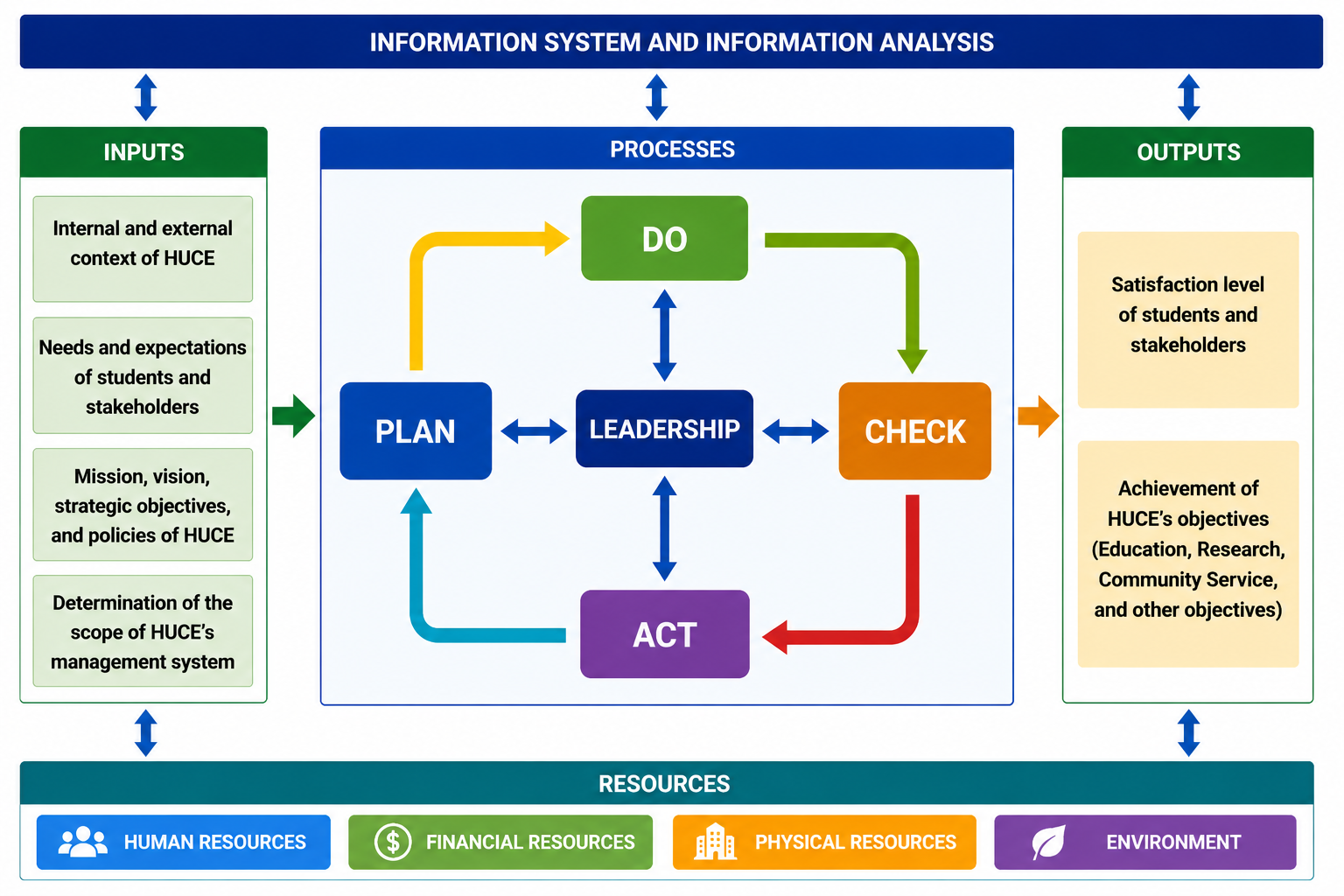
One of the key highlights of the Regulation is the adoption of the process approach, with the Plan–Do–Check–Act (PDCA) cycle serving as the foundation for system operation and continuous improvement. The Regulation is developed in alignment with ISO 21001 – Educational Organizations — Management Systems for Educational Organizations (EOMS), emphasizing evidence-based decision-making, regular monitoring and evaluation, benchmarking, and continuous quality improvement in education, research, innovation, and community engagement.
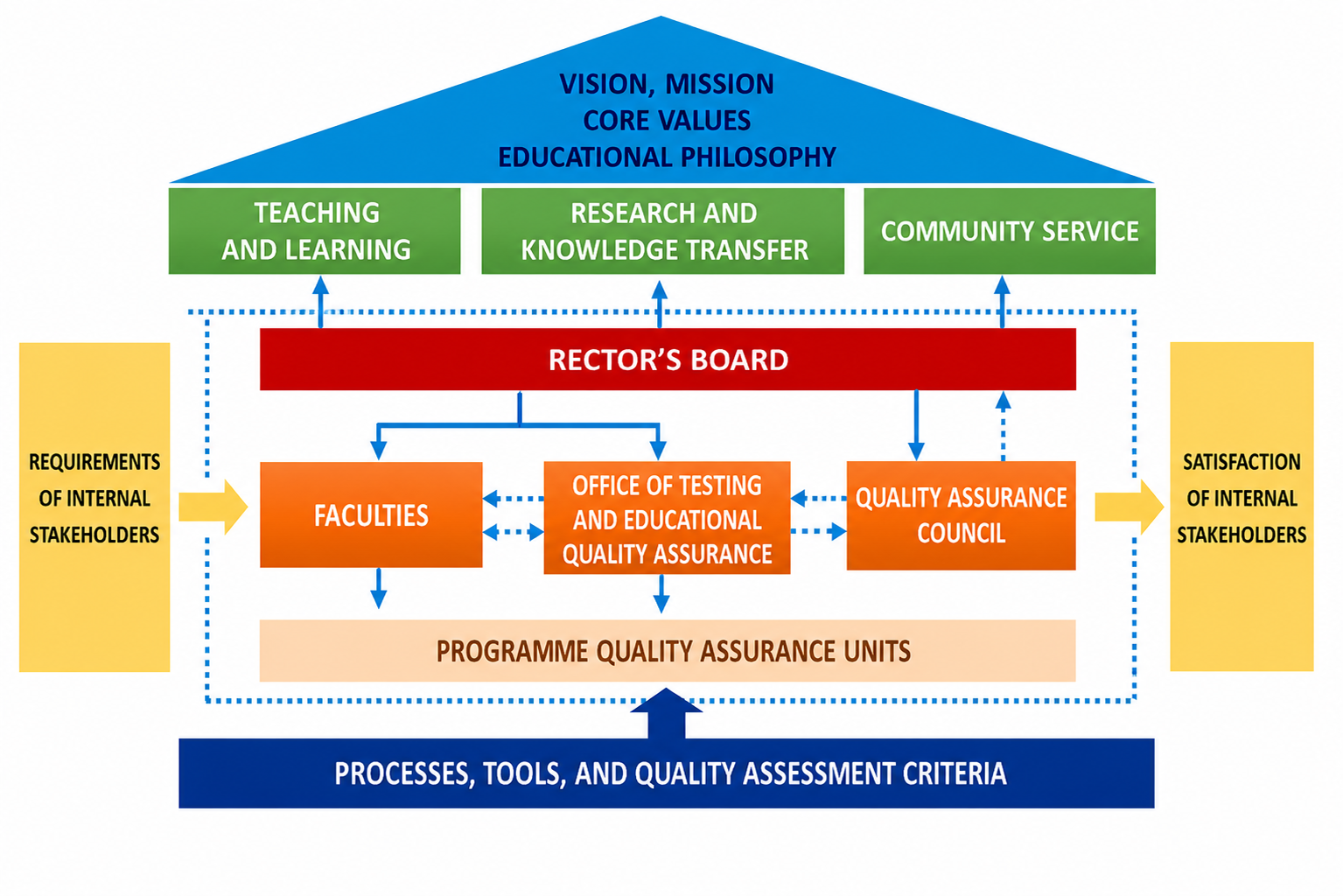
The Regulation also clearly defines the organizational structure of the University's Quality Management System, specifying the roles and responsibilities of the University Council, the Board of Management, the ISO Committee, academic units, administrative offices, and quality assurance teams in implementing, monitoring, evaluating, and continuously improving quality at all management levels.
The issuance of the Regulation on the Quality Management System marks an important milestone in HUCE's efforts to modernize university governance and strengthen its quality management practices. It contributes to fostering a sustainable quality culture, promoting continuous quality improvement, and providing a solid foundation for the development of the University's Internal Quality Assurance (IQA) System in accordance with national and international standards.

 /
/



 29/09/2026